
🌾🧪Safe Application of Pesticides PA1 – Practice

Guide to Revising

Revision – funnel your knowledge…
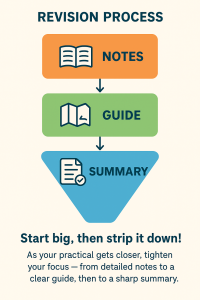
🧠 Build your revision like a funnel — start wide with full notes, narrow it down to a clear guide, then finish with a short summary to keep.

Go to PA1 Revision

🌾 PA1 Practice Test – Set 4 (Advanced)

Pass rule: 21/30 AND at least 1 correct in each section

Q1 Under the Food and Environment Protection Act (FEPA), pesticides must:

Correct answer: Be used only if approved for the intended purpose

Q2 The Sustainable Use Directive (SUD) aims to:

Correct answer: Improve safety and reduce risks from pesticide use

Q3 Under the Provision and Use of Work Equipment Regulations (PUWER), pesticide application equipment must be:

Correct answer: Maintained and suitable for its intended use

Q4 What does the corrosive hazard symbol indicate?

Correct answer: It can damage metals and cause severe skin burns

Q5 Which legislation protects wild birds, animals and plants from harm caused by pesticide misuse?

Correct answer: Wildlife and Countryside Act

Q6 Under COSHH Regulations, employers must:

Correct answer: Assess risks and prevent exposure to hazardous substances

Q7 What information does the MAPP number on a pesticide label confirm?

Correct answer: The product has been authorised for use in the UK

Q8 Where can detailed information on chemical hazards and emergency procedures be found?

Correct answer: Safety Data Sheet (SDS)

Q9 Which information is typically found on the front panel of a pesticide label?

Correct answer: Product name and approval number

Q10 What does the maximum total dose on a pesticide label refer to?

Correct answer: Maximum amount per hectare per season

Q11 Pesticide contamination by inhalation occurs when:

Correct answer: Pesticide vapour or spray droplets are breathed in

Q12 What is the purpose of gloves when handling pesticides?

Correct answer: Protect hands from chemical exposure

Q13 Which PPE item protects the eyes from spray splashes?

Correct answer: Face shield or goggles

Q14 Which factor most increases the risk of pesticide exposure during spraying?

Correct answer: Working in strong wind

Q15 If pesticide enters the eye, the operator should first:

Correct answer: Rinse the eye immediately with clean water

Q16 Why is it important to wash hands before eating or drinking after pesticide use?

Correct answer: To prevent ingestion of pesticide residues

Q17 Pesticide stores should be designed to:

Correct answer: Prevent unauthorised access

Q18 Why should pesticides be stored separately from animal feed?

Correct answer: To prevent contamination of feed

Q19 During transport, pesticide containers should be:

Correct answer: Secured to prevent movement

Q20 Why should pesticide containers always be kept upright during transport?

Correct answer: To avoid leakage or spillage

Q21 What is the purpose of triple rinsing pesticide containers?

Correct answer: Reduce chemical waste and contamination

Q22 Rinse water from cleaned containers should normally be:

Correct answer: Applied through the sprayer to the target crop

Q23 Spray records must include:

Correct answer: Product used, date, location, and operator

Q24 Before spraying, the operator should check:

Correct answer: Sprayer condition, calibration, and weather conditions

Q25 The main route of pesticide absorption for operators is usually:

Correct answer: Skin contact

Q26 PPE must be:

Correct answer: Suitable, in good condition, and correctly fitted

Q27 How often should sprayers be calibrated?

Correct answer: Before each spraying season or when conditions change

Q28 When spraying, drift can be minimised by:

Correct answer: Using correct nozzle type, pressure, and weather conditions

Q29 After spraying, operators should:

Correct answer: Wash hands and face, remove PPE safely, and store it clean

Q30 How should spilled pesticide be dealt with?

Correct answer: Contain and absorb using appropriate material, then dispose safely

Below is presentation which gives more details about Oilseeds grown in the UK.