
Healthy Soil, Healthy Farming.
Soil Science for Agronomy
What is soil?
- Highly complex assemblage of:
- geological materials,
- dead organic matter,
- living roots,
- animals and microbes,
- soil water
- soil atmosphere.
- They form a dynamic system in which the line between living and dead frequently becomes academic.

Farming in Germany using latest Interra Scan soil mapping service from Syngenta
Quick Soil Facts
| Soil Facts https://www.soilassociation.org/ |
| Healthy soils have six different layers . |
| It is estimated that more than half of all earth species live in the soil! |
| One gram of soil (a quarter of a tablespoon) can harbour up to 10 billion organisms – that’s more than the number of people living on the planet! |
| Only about 1% of the microorganisms found in soil have been identified so far |
| 95% of food production relies on the soil |
| Soils store more carbon than the atmosphere, and all of the world’s plants and forests combined. |
| Earthworms are a real hero of healthy soils – Earthworms do amazing work in soils! Their activity offers many benefits, from increased nutrient availability and better drainage, to creating a more stable soil structure. |
| Every minute we lose the equivalent of 30 football pitches of fertile soil. |
| Organic farms have 20% more organic matter in their soil on average. |
An in depth video about the foundation for all agriculture…

Soil – The Foundation of Every Crop
Healthy soil is one of a farm’s greatest assets. It supports crops, stores water, supplies nutrients, recycles organic matter and provides a home for billions of living organisms. Every decision a farmer makes – from choosing a crop to deciding when to cultivate or apply fertiliser – begins with understanding the soil.
Whether you are growing wheat, potatoes, sugar beet or grass, healthy soils improve yields, reduce costs and help farms become more resilient to changing weather conditions.
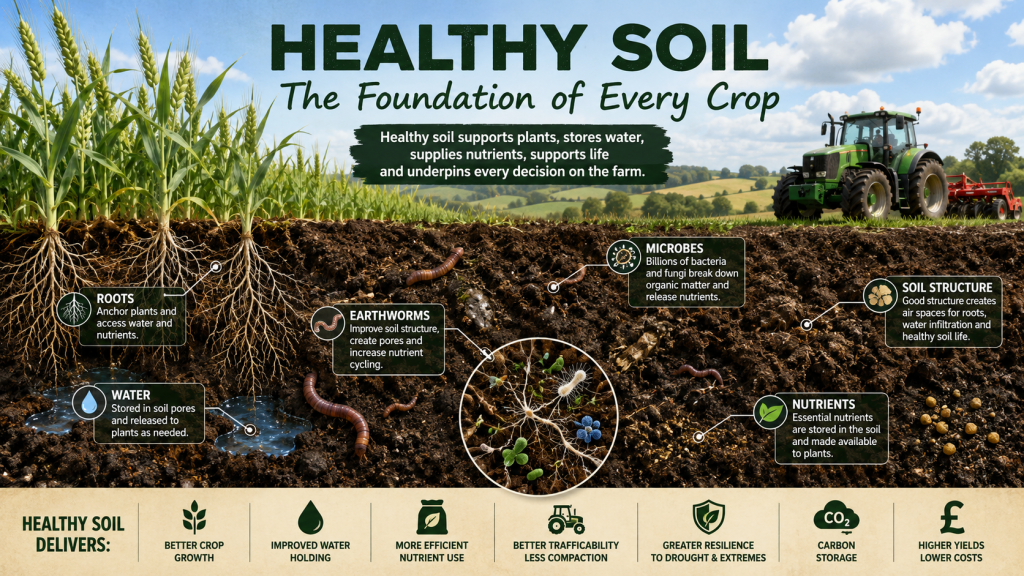
Healthy Soil – The Foundation of Every Crop
🔍 Click to zoom
Soil is much more than the ground beneath our feet. It is a living ecosystem that supports every stage of crop production.
Healthy soil:
- 🌱 Supports strong root growth
- 💧 Stores and supplies water
- 🌾 Provides essential nutrients
- 🪱 Supports earthworms and soil life
- 🚜 Carries machinery while resisting compaction
- 🌍 Stores carbon and protects the environment
Every successful crop begins with healthy soil.
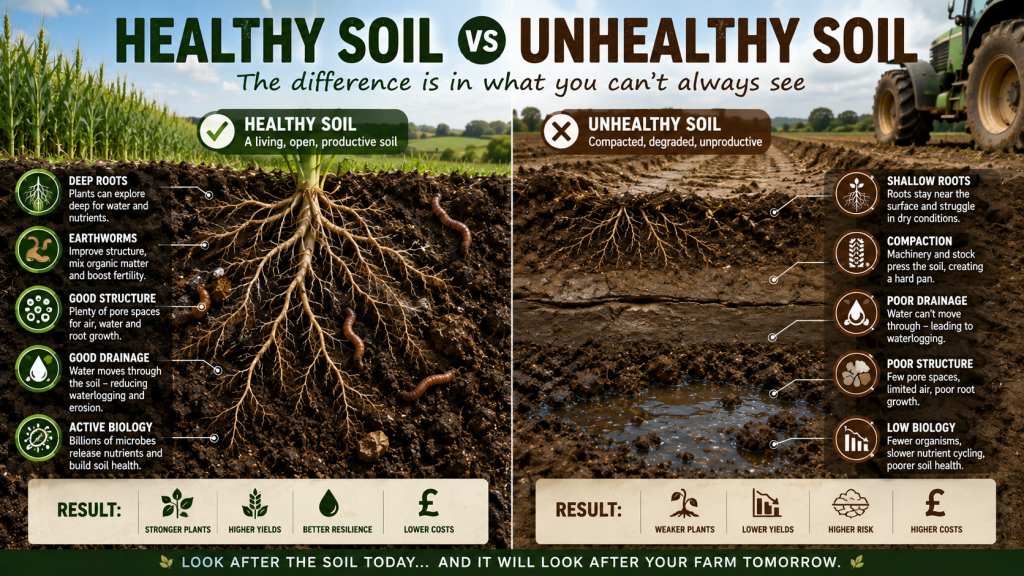
Healthy Soil vs Compacted Soil
🔍 Click to zoom
The condition of a soil often determines the success of a crop long before the seed is planted.
Healthy soil
Healthy soils have a stable structure made up of soil particles, organic matter and pore spaces. These spaces allow water and air to move through the soil, giving roots room to grow and microorganisms the oxygen they need.
Healthy soils typically have:
- Deep rooting crops
- Good drainage
- Plenty of earthworms
- High biological activity
- Better water infiltration
- Improved nutrient cycling
Unhealthy soil
Poorly managed soils can become compacted by machinery or livestock, particularly when worked in wet conditions. Compaction squeezes out the air spaces that roots and soil organisms depend upon.
Compacted soils often show:
- Shallow rooting
- Standing water
- Poor drainage
- Reduced earthworm activity
- Lower nutrient availability
- Reduced crop growth and yield
Looking after soil structure is one of the most important jobs in modern agriculture.
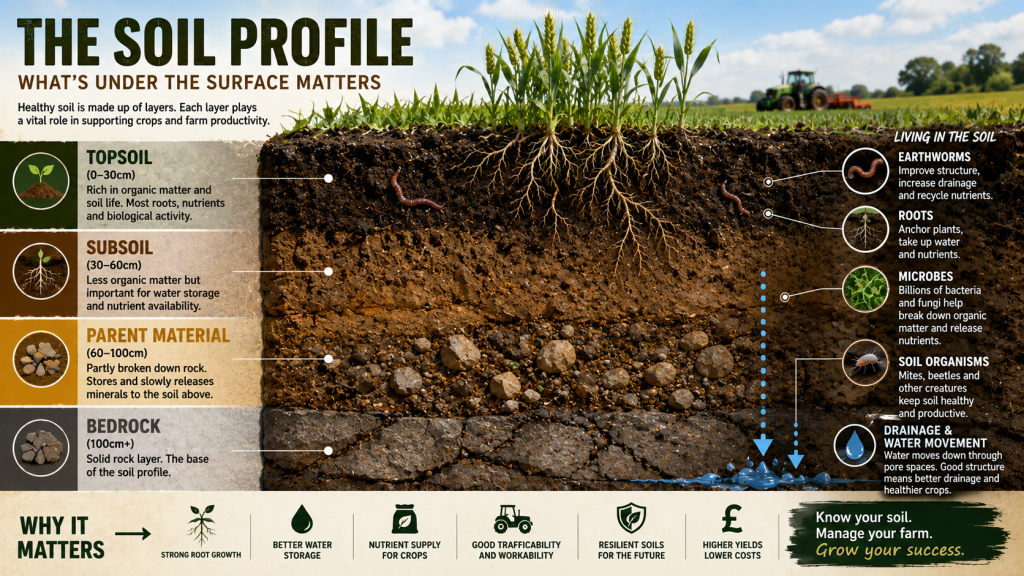
What’s Beneath the Surface?
🔍 Click to zoom
A soil profile shows the different layers that make up the soil beneath a field. Each layer performs a different role in supporting crop growth.
Topsoil
The topsoil is the most fertile layer. It contains the highest levels of organic matter, nutrients, roots and soil organisms. Most cultivation and biological activity occurs here.
Subsoil
The subsoil contains less organic matter but stores large amounts of water. Deep crop roots grow into this layer during dry periods, helping crops survive drought.
Parent Material
This layer consists of weathered rock from which the soil originally formed. It slowly releases minerals and influences soil texture.
Bedrock
Bedrock forms the solid foundation beneath the soil profile. Although roots rarely reach this layer, it affects drainage, geology and the characteristics of the soil above.
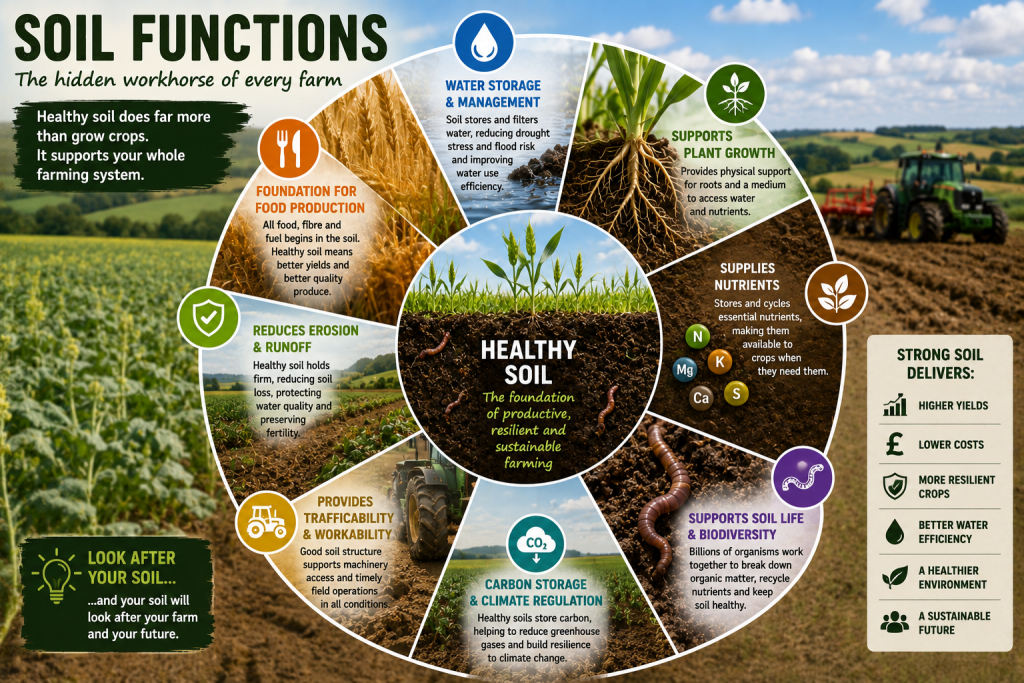
The Many Functions of Soil
🔍 Click to enlarge
Healthy soil performs many jobs at the same time.
Supports Plant Growth
Soil anchors plant roots while supplying water, oxygen and nutrients.
Stores Water
Healthy soils absorb rainfall like a sponge, reducing flooding while supplying crops with water during dry periods.
Supplies Nutrients
Nitrogen, phosphorus, potassium, magnesium and many other nutrients are stored within the soil before becoming available to crops.
Supports Soil Life
Earthworms, fungi, bacteria and countless other organisms recycle nutrients, improve soil structure and build organic matter.
Allows Machinery to Operate
Strong soil structure allows tractors and harvesters to travel across fields while reducing compaction and fuel use.
Reduces Erosion
Healthy soils resist wind and water erosion, protecting valuable topsoil and nearby watercourses.
Stores Carbon
Organic matter locks carbon into the soil, helping reduce greenhouse gas emissions while improving soil fertility.
Ultimately, healthy soil produces healthier crops, better yields and more profitable farming.
From Soil Information to Farm Decisions
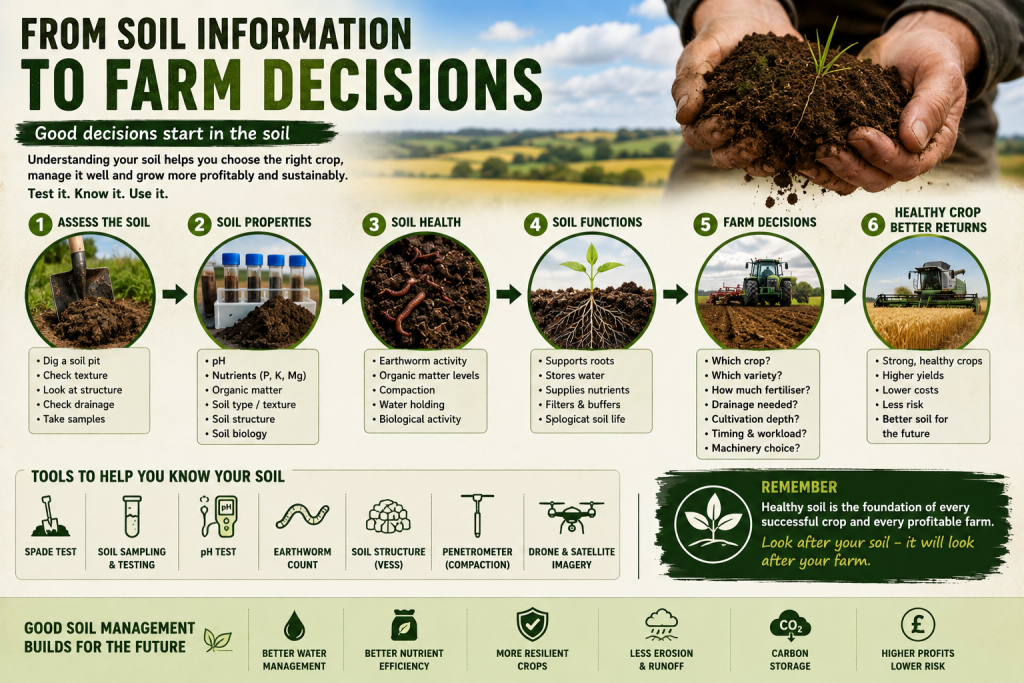
🔍 Click to zoom
Farmers do not simply grow crops—they make decisions based on evidence.
By assessing the soil, they can answer important questions:
- Which crop is most suitable?
- Which variety should be grown?
- Does the field require drainage?
- Is cultivation needed?
- What nutrients are available?
- How much fertiliser should be applied?
- Will the soil support machinery safely?
- Can the crop tolerate dry conditions?
This information helps farmers produce profitable crops while protecting the environment and maintaining soil health for future generations.
Key Takeaways
Healthy soils are living systems that underpin successful agriculture. They support crop growth, improve water management, recycle nutrients, protect the environment and influence every major farm decision.
By understanding soil texture, structure, biology and drainage, farmers can choose the right crops, manage them more efficiently and improve both productivity and sustainability.
Look after your soil today, and it will look after your farm tomorrow.
Below is presentation which gives more details about soil.