
🌾 Crop Husbandry at a glance
| Stage | Main Objective |
|---|---|
| Planning | Choose the right crop and field |
| Establishment | Achieve rapid, even germination |
| Crop Management | Maximise healthy crop growth |
| Harvest | Collect crop at optimum maturity |
| Storage | Maintain crop quality |
🚜 Key Management Decisions
| Consider | Why it Matters |
|---|---|
| Soil Type | Influences cultivations and crop choice |
| Weather | Affects timing of operations |
| Crop Rotation | Reduces pests and diseases |
| Variety Selection | Determines yield and disease resistance |
| Nutrition | Supports healthy crop growth |
| Weed Control | Reduces competition |
| Pest & Disease Monitoring | Protects yield and quality |
| Harvest Timing | Maximises yield and value |
🌱 Essential Plant Nutrients
| Nutrient | Main Function |
|---|---|
| Nitrogen (N) | Leaf and stem growth |
| Phosphorus (P) | Root development |
| Potassium (K) | Overall plant health |
| Sulphur (S) | Protein production |
| Magnesium (Mg) | Chlorophyll formation |
| Calcium (Ca) | Cell wall strength |
🌾 Crop Husbandry Goals
| Aim | Benefit |
|---|---|
| Healthy Establishment | Strong early growth |
| Balanced Nutrition | Maximum yield potential |
| Effective Weed Control | Less competition |
| Disease Prevention | Better crop quality |
| Timely Harvest | Reduced field losses |
| Good Storage | Maintains crop value |
🌍 Sustainable Farming
| Practice | Benefit |
|---|---|
| Crop Rotation | Improves soil health |
| Soil Testing | Accurate nutrient application |
| IPM | Reduces pesticide use |
| Precision Farming | Improves efficiency |
| Buffer Strips | Protect watercourses |
| Cover Crops | Reduce erosion |
📊 Typical UK Arable Crops
| Crop | Main Use |
|---|---|
| Wheat | Milling & Animal Feed |
| Barley | Feed & Brewing |
| Oats | Food & Feed |
| Oilseed Rape | Vegetable Oil & Biodiesel |
| Sugar Beet | Sugar Production |
| Potatoes | Food |
| Field Beans | Animal Feed & Protein |
| Peas | Food & Feed |
| Maize | Silage & AD |
🔍 Crop Monitoring Checklist
✓ Plant population
✓ Crop growth stage
✓ Weed pressure
✓ Pest activity
✓ Disease symptoms
✓ Nutrient deficiencies
✓ Soil moisture
✓ Weather forecast
Explore Crop Husbandry
Learn more about the individual stages of crop production by exploring the sections below:
(Use menu above to access specific pages for these)
This detailed look at Crop Husbandry is often referred to as Agronomy
- 🌾 Cereals
- 🌼 Oilseed Rape
- 🥔 Potatoes
- 🫘 Pulses
- 🌱 Sugar Beet
- 🌿 Crop Nutrition
- 🌍 Soil Management
- 💧 Drainage and Irrigation
- 🐞 Weeds, Pests and Diseases
- 🌱 Integrated Pest Management (IPM)
- 🚜 Precision Farming
- 🌾 Harvesting
- 🏚️ Grain Storage
Crop Husbandry
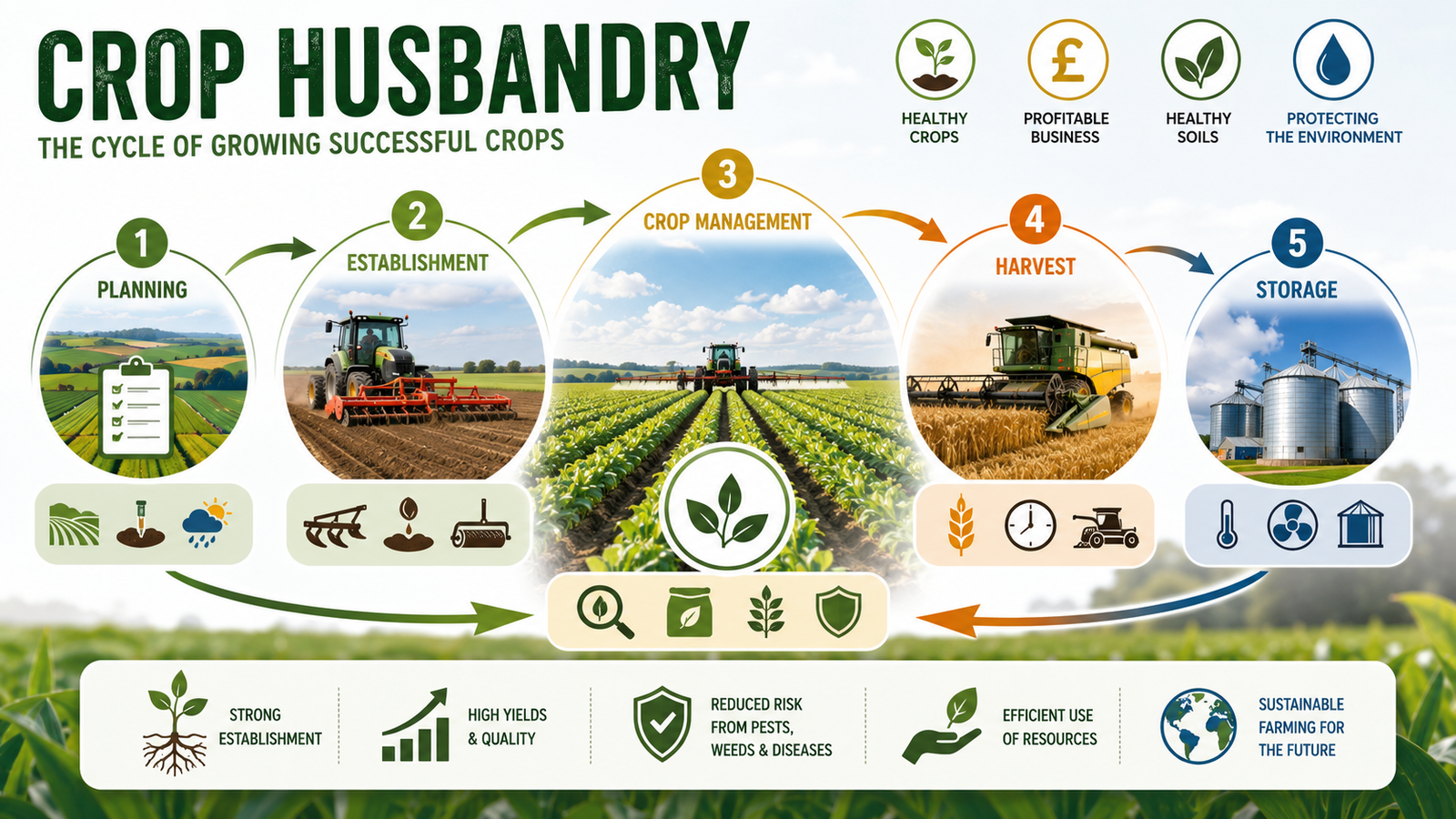
🔍 Click image to enlarge
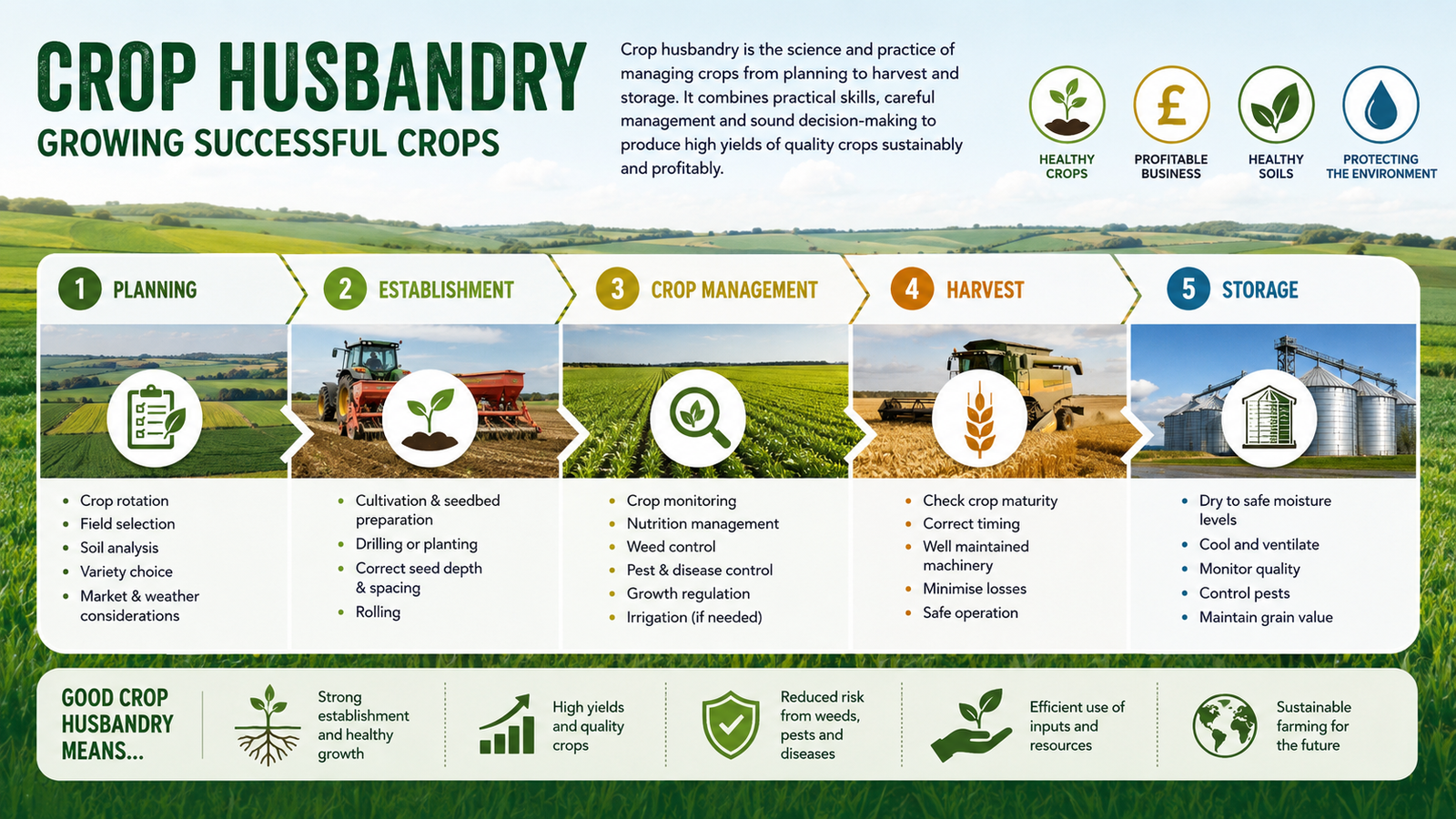
Growing Crops Successfully
Crop husbandry is the science and practice of growing healthy, productive crops from planning and establishment through to harvest and storage. It combines practical farming skills with scientific knowledge to produce high-quality crops efficiently, sustainably and profitably.
Modern farming is about far more than sowing seed and waiting for harvest. Every crop requires careful planning, regular monitoring and timely management throughout the growing season. Farmers must make informed decisions based on soil conditions, weather, crop requirements, machinery, pests, diseases and market demands.
Whether growing cereals, oilseed rape, potatoes, sugar beet, forage crops or pulses, the principles of good crop husbandry remain the same. Success depends on understanding how each stage of crop production influences the next and making the right decisions at the right time.
What is Crop Husbandry?
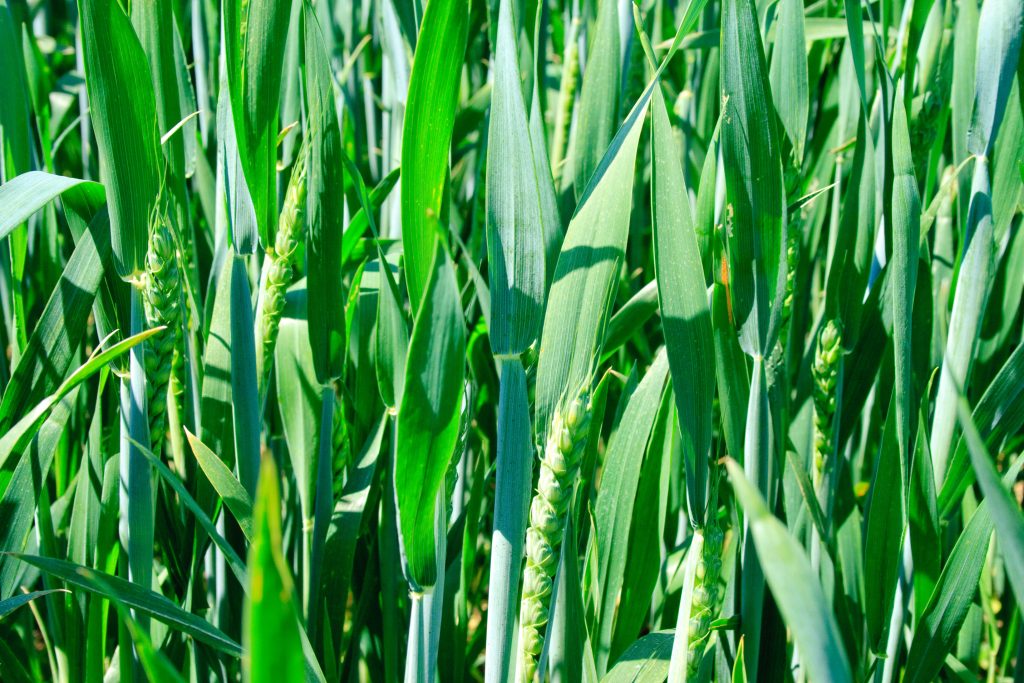
Crop husbandry covers every stage of crop production, from selecting the most suitable field through to harvesting and storing the final crop.
Good crop husbandry aims to:
- Produce high yields of quality crops.
- Maintain healthy, fertile soils.
- Protect crops from weeds, pests and diseases.
- Use nutrients, water and crop protection products responsibly.
- Protect wildlife and the wider environment.
- Maintain profitable and sustainable farm businesses.
Every operation carried out in the field has an effect on crop performance. A well-established crop is more likely to compete with weeds, withstand pests and diseases, and achieve its full yield potential.
The Crop Husbandry Cycle
Successful crop production follows a continuous cycle of planning, establishment, crop management, harvest and storage.
🌱 Planning
The growing season begins long before the first seed is planted.
Farmers carefully plan each crop by considering:
- Crop rotation
- Soil type and condition
- Drainage
- Previous cropping history
- Climate and local weather patterns
- Market demand
- Machinery availability
- Environmental regulations
Choosing the right crop for the right field is one of the most important decisions made during the season.
Good planning reduces risk, improves crop performance and helps maintain long-term soil health.
🚜 Establishment
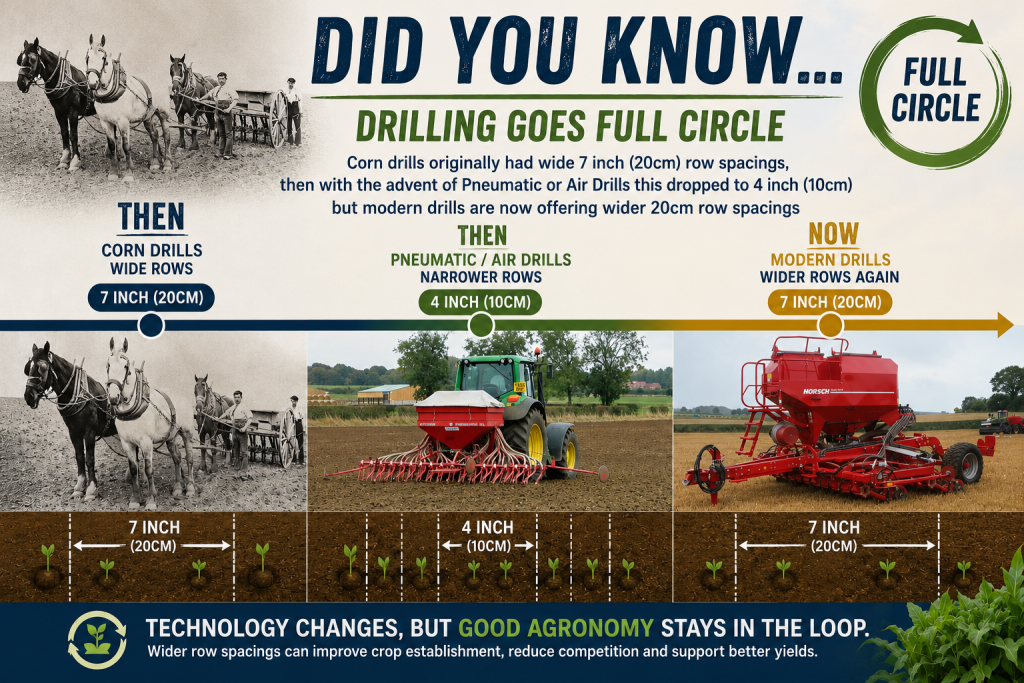
🔍 Click to enlargeEstablishing the crop successfully is essential for achieving good yields.
This stage includes:
- Soil cultivation
- Seedbed preparation
- Drilling or planting
- Rolling where appropriate
- Achieving the correct seed depth and spacing
The aim is to create the best possible conditions for germination by ensuring:
- Good seed-to-soil contact
- Adequate moisture
- Suitable soil temperature
- Sufficient air around the seed
Even crop establishment allows plants to develop strong root systems and compete effectively throughout the growing season.
🌾 Crop Growth and Management
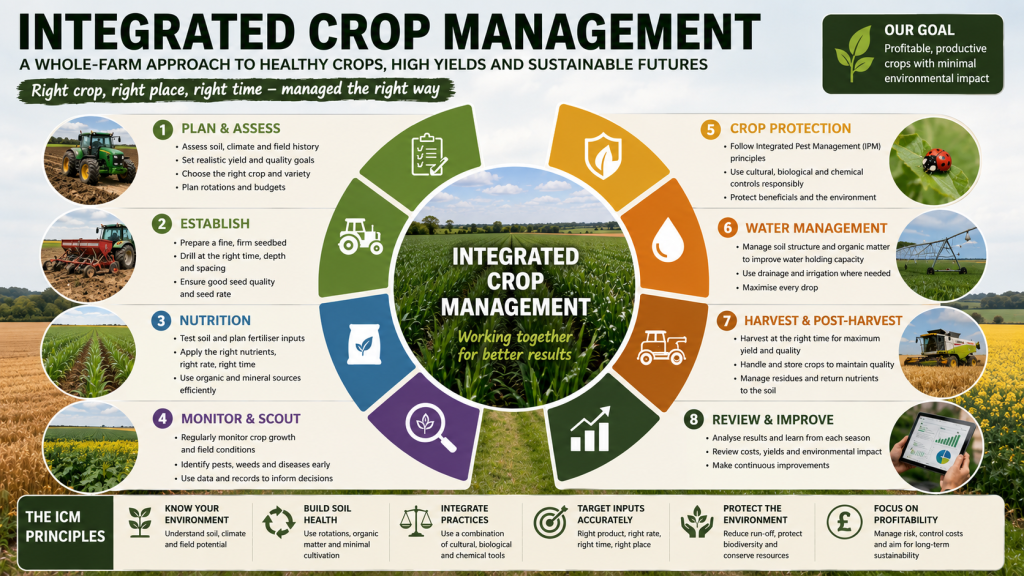
Once established, crops require regular monitoring and careful management. This is not done in isolated but as part of an holistic “Integrated CROP Management” strategy
Throughout the season farmers carry out activities such as:
- Crop walking
- Assessing plant growth
- Monitoring weeds
- Identifying pests
- Monitoring diseases
- Applying fertilisers
- Applying crop protection products when necessary
- Managing irrigation where available
- Recording crop development
Modern farming relies on observation and evidence rather than guesswork. Decisions are based on crop condition, field inspections, weather forecasts and increasingly on technology such as GPS guidance, satellite imagery, drones and precision farming equipment.
🌿 Plant Nutrition
Like all living organisms, crops require nutrients to grow and develop.
The three primary nutrients are:
- Nitrogen (N) – encourages leafy growth and increases yield.
- Phosphorus (P) – promotes strong root development and early establishment.
- Potassium (K) – improves overall plant health, water regulation and crop quality.
Secondary nutrients and trace elements are also important for healthy crop growth.
Nutrient applications are carefully planned using soil analysis, crop requirements and national guidance such as RB209 to ensure crops receive sufficient nutrients without harming the environment.
🐞 Weed, Pest and Disease Control
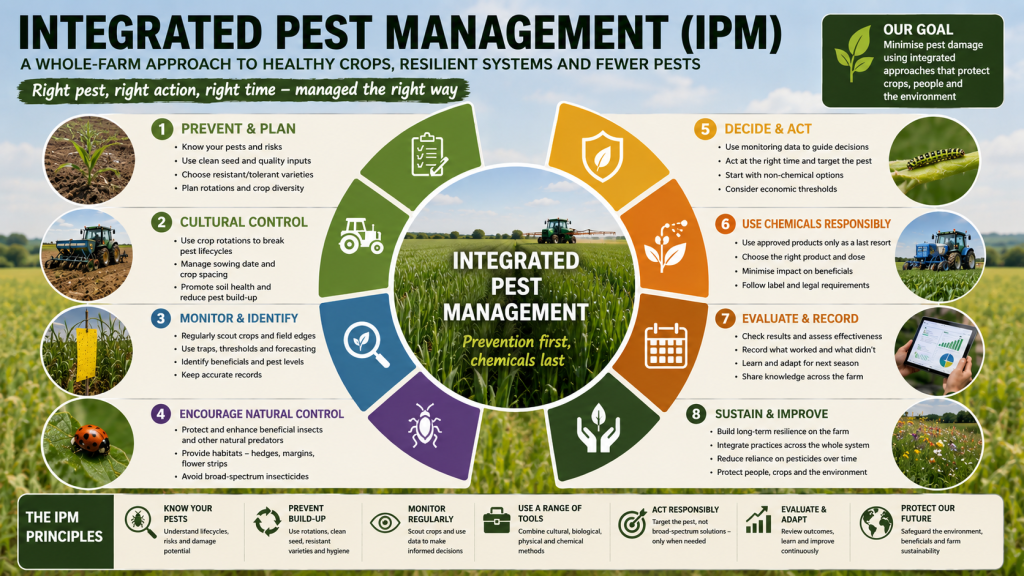
Healthy crops face constant competition and attack throughout the growing season. Protecting these crops is also done with an integrated approach like the whole crop management – this time the holistic approach is based around pests (which includes weeds and diseases) and is called “Integrated PEST Management” you may come across both terms.
Common challenges include:
Weeds
Weeds compete with crops for:
- Light
- Water
- Nutrients
- Space
Effective weed control improves crop establishment and protects yield.
Pests
Insects, slugs, rodents and other pests can damage crops directly or spread disease.
Regular monitoring helps farmers identify problems before significant damage occurs.
Diseases
Fungal, bacterial and viral diseases can reduce both yield and crop quality.
Successful disease management relies on:
- Resistant varieties
- Crop rotation
- Good field hygiene
- Regular monitoring
- Timely treatment when required
Many farms now follow the principles of Integrated Pest Management (IPM), combining different control methods to reduce reliance on pesticides while maintaining healthy crops.
Precision Farming
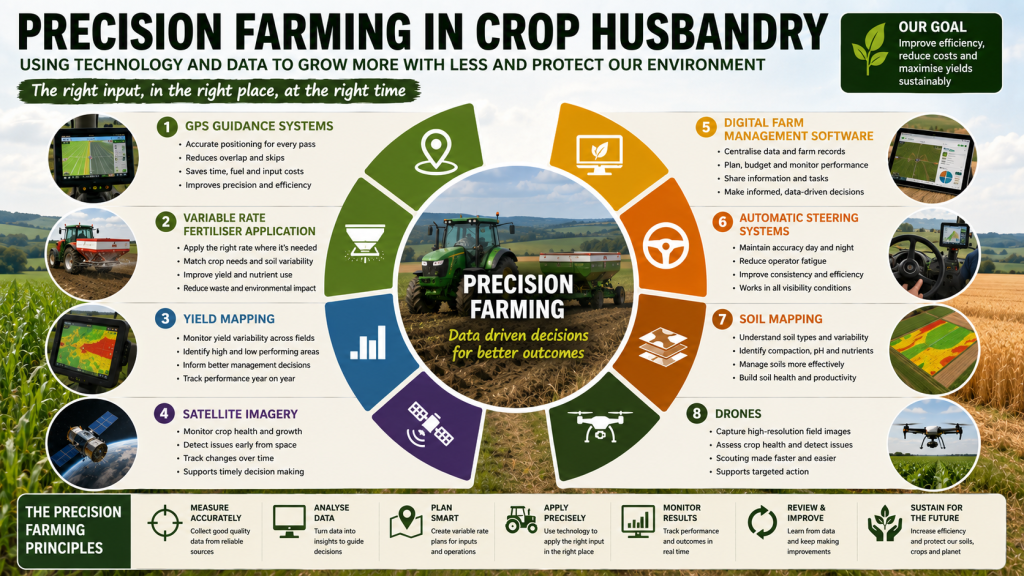
Technology plays an increasingly important role in modern crop husbandry.
Many farms now use:
- GPS guidance systems
- Variable rate fertiliser application
- Yield mapping
- Satellite imagery
- Drones
- Soil mapping
- Automatic steering systems
- Digital farm management software
These technologies help farmers apply inputs more accurately, reduce waste, improve efficiency and make better management decisions.
Harvest
See separate page on harvest and storage – go to
Sustainability and Environmental Responsibility
Modern crop husbandry must balance productivity with environmental responsibility.
Today’s farmers work to:
- Protect soil structure
- Reduce erosion
- Improve soil organic matter
- Protect rivers and groundwater
- Encourage wildlife habitats
- Reduce greenhouse gas emissions
- Improve nutrient use efficiency
- Minimise pesticide use through Integrated Pest Management
Producing food sustainably helps ensure farming remains productive for future generations while protecting the countryside.
Skills Needed in Crop Husbandry
Successful crop production requires a wide range of practical and technical skills.
These include:
- Operating agricultural machinery safely
- Understanding soils and cultivation systems
- Identifying crops, weeds, pests and diseases
- Applying fertilisers and crop protection products responsibly
- Interpreting weather forecasts
- Using precision farming technology
- Recording field information accurately
- Following health and safety legislation
- Solving problems and making informed decisions
Modern agriculture combines traditional farming knowledge with science, engineering and technology.
Why Crop Husbandry Matters
Crop husbandry forms the foundation of food production.
The crops grown by farmers provide:
- Food for people
- Feed for livestock
- Renewable fuels
- Industrial raw materials
- Ingredients for many everyday products
Efficient crop husbandry improves food security, supports rural businesses, protects the environment and contributes to a sustainable future.
Explore Crop Husbandry
Learn more about the individual stages of crop production by exploring the sections below:
- 🌾 Cereals
- 🌼 Oilseed Rape
- 🥔 Potatoes
- 🫘 Pulses
- 🌱 Sugar Beet
- 🌿 Crop Nutrition
- 🌍 Soil Management
- 💧 Drainage and Irrigation
- 🐞 Weeds, Pests and Diseases
- 🌱 Integrated Pest Management (IPM)
- 🚜 Precision Farming
- 🌾 Harvesting
- 🏚️ Grain Storage
Final Thoughts
Successful crop husbandry is about making informed decisions throughout the growing season. Every field, every crop and every year presents different challenges, requiring farmers to combine experience, scientific knowledge and modern technology to achieve the best possible outcomes.
By understanding the principles of crop husbandry, students, farmers and agricultural professionals can appreciate how careful planning, skilled management and sustainable practices work together to produce the food, feed and renewable resources that society depends upon.
Below is presentation which gives more details about Oilseeds grown in the UK.