
Understanding Causes, Pathogens, and Immunity
Learning Outcomes:
- Identify common causes of livestock disease, including pathogens such as bacteria, viruses, and parasites 🦠.
- Explain why livestock are at greater risk of disease during the winter housing period ❄️
- Describe the link between livestock health, productivity, and farm profitability 💷.
- Recognise the role of hygiene and preventative measures in reducing disease risk 🧼.
Livestock Health Videos
Animal Health Terms to Know
| Term | Meaning |
| Acute | Sudden and severe disease |
| Chronic | Develops slowly, often long-term |
| Anthelmintic | Medicine to kill worms |
| Antibiotic | Medicine to kill bacteria |
| Antiseptic | Applied to skin to reduce infection |
| Anti-inflammatory | Reduces swelling |
| Contagious | Spreads by direct contact |
| Endemic | Always present in a population |
| Infectious | Caused by microbes; can spread |
| Intramuscular | Injected into a muscle |
| Subcutaneous | Injected under the skin |
| Prescribed | Given by a vet for a specific animal |
| Preventative | Given to stop disease (e.g. vaccines) |
| Needle gauge | Size of a needle used for injections |
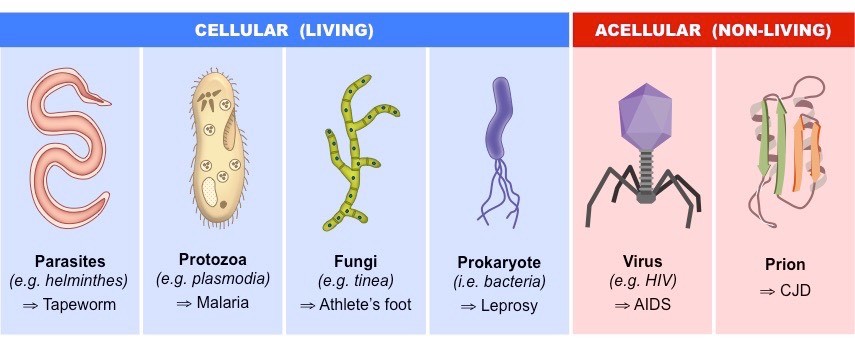
Causes of Diseases in Farm Livestock.
Beat the Bugs: Your Livestock Disease Defence Guide.
Working with cattle, sheep, and pigs is incredibly rewarding, but keeping them healthy is the number one job for any serious livestock farmer. Diseases can hit hard, impacting welfare, productivity, and the bottom line. So, understanding the enemy – pathogens and other disease causes – and how our animals fight back is core knowledge for any serious livestock manager.
What’s Making Our Animals Sick?
Diseases in livestock can be caused by:
- Pathogens – These are organisms such as bacteria, viruses and fungi that invade the body and disrupt it’s normal function causing harm to the animal.
- Imbalances in the body – Deficiencies or excesses in vital nutrients or elements can lead to metabolic diseases. For example, if an animal is low in calcium or magnesium, it may become ill.
Understanding the root causes is crucial for effective management and prevention of livestock diseases.
Let’s take a closer look at pathogens, types of disease, and how animals fight them.
What is a Pathogen?
A pathogen is any microbe (organism or virus) that causes disease. Meet the pathogens rogues’ gallery.
Key Types of Pathogens:
- Viruses
- Bacteria
- Fungi
- Protozoa
- Flatworms
- Roundworms
Bacteria
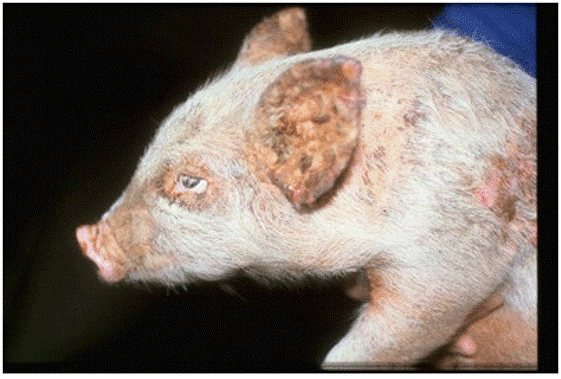
Bacteria are small living organisms that come in many shapes and sizes. They thrive in dirty, damp, and warm places.
- Animals’ immune systems produce antibodies upon bacterial infection to fight off invaders and prevent further damage.
- Despite the availability of antibiotics to combat bacterial infections, their rapid ability to multiply and adapt makes them challenging to control. So we must use antibiotics carefully.
🦠 Example: Anthrax is a serious disease caused by bacteria.
Viruses
Viruses are even smaller than bacteria and and known for their high transmission rates. They can spread easily through vectors like wind and contaminated surfaces, making biosecurity measures crucial on farms. A common viral disease in livestock during winter months, such as respiratory infections, often exacerbates herd health risks.
- There are limited drugs available for viral diseases.
- Viruses spread easily, even through the wind.
🦠 Examples:
- Schmallenberg Virus
- Foot and Mouth Disease
- Scours in young animals (a common winter virus)
Fungi
Fungal diseases spread easily, particularly in humid environments like farm buildings. They often live in wooden fittings and can be zoonotic, posing risks to humans.
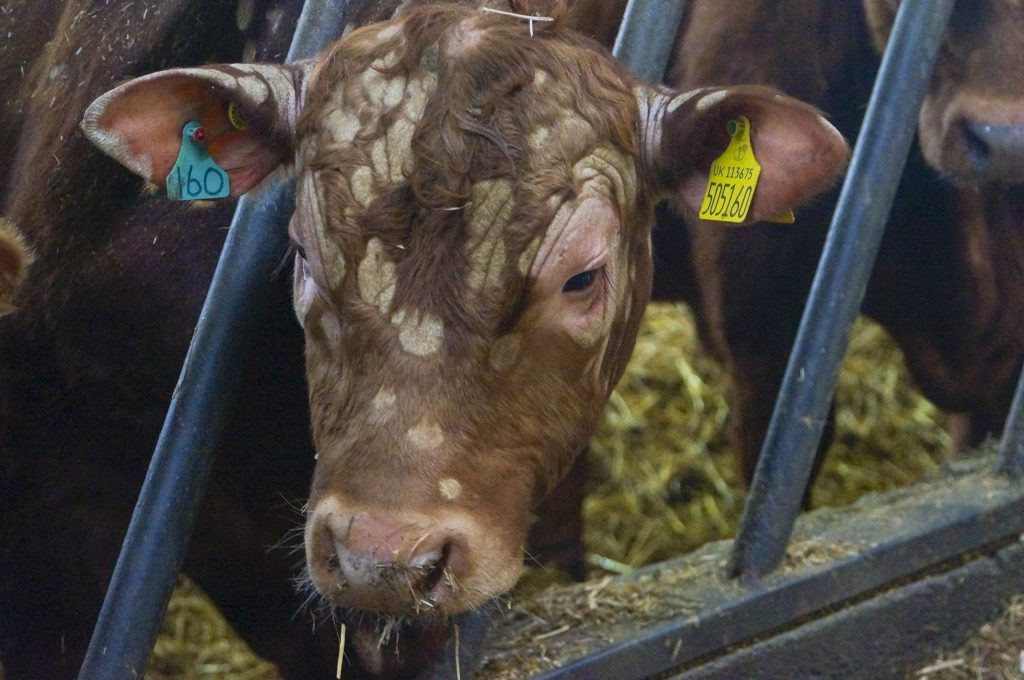
- Ringworm is a fungal disease that can spread to humans — it is zoonotic.
- There’s no direct cure, but a vaccine can be made to order.
- Cattle can be treated with a special medicated wash.
Parasites
Parasites harm livestock by living on or inside the host. They are divided into internal (endoparasites) and external (ectoparasites):.
Internal Parasites (Endoparasites)
These live inside the body and include:
- Liver fluke
- Roundworms
- Tapeworms
- Lungworms
They can cause weight loss, scouring, or even death. Treatments include anthelmintics and good grazing management, like rotational grazing, help control them.
External Parasites (Ectoparasites)
These live on the outside of animals and can cause:
- Loss of condition
- Reduced Growth
- Skin Irritation and hair loss
They can often be treated with pour-on products. Be careful — they often come from bought-in or stray animals.
Metabolic Diseases
Not all diseases come from outside the body. Metabolic diseases happen when something is missing or out of balance in the animal’s system. These issues can manifest in various forms:
🩺 Examples:
- Calcium Deficiency: Can lead to milk fever in dairy cows, affecting their ability to stand or produce milk effectively.
- Magnesium Deficiency: Known as grass staggers, this condition often affects grazing animals and results in tremors and convulsions.
Appropriate treatments, such as mineral supplements and preventative medicines, are available to manage these conditions effectively.
Here’s a clear table summarizing the main livestock metabolic diseases, commonly relevant to cattle, sheep, and goats:
| Disease | Species Affected | Primary Cause | Key Symptoms | Prevention / Management |
|---|---|---|---|---|
| Milk Fever (Hypocalcaemia) | Dairy cattle, ewes | Low blood calcium around calving | Weakness, inability to stand, cold ears, coma | Adequate calcium balance, dietary management pre-calving |
| Ketosis (Acetonemia) | Dairy cattle, ewes | Negative energy balance → fat breakdown | Weight loss, reduced appetite, acetone smell, drop in milk yield | Good nutrition in early lactation, energy supplements |
| Grass Tetany (Hypomagnesaemia) | Cattle, sheep | Low magnesium levels, often on lush pasture | Nervousness, tremors, convulsions, sudden death | Magnesium supplementation, avoid high-risk grazing |
| Pregnancy Toxaemia | Ewes, goats | Energy deficiency during late pregnancy (twins/triplets) | Depression, blindness, recumbency, death | Adequate energy intake in late gestation |
| Fatty Liver Syndrome | Dairy cattle | Excess fat mobilization postpartum | Reduced appetite, poor milk yield, ketosis signs | Maintain body condition, proper transition diets |
| Displaced Abomasum | Dairy cattle | Energy imbalance and reduced rumen fill | Reduced feed intake, lower milk yield, “ping” sound on abdomen | Proper feeding, avoid sudden diet changes |
| Rumen Acidosis | Cattle, sheep | Excess rapidly fermentable carbohydrates | Diarrhea, lameness, reduced intake, low rumen pH | Gradual dietary changes, adequate fiber |
| Laminitis | Cattle, horses | Often secondary to acidosis | Lameness, hoof deformities | Good feeding practices, prevent acidosis |
| Bloat (Rumen Tympany) | Cattle, sheep | Gas buildup from lush legumes or feed imbalance | Distended abdomen, discomfort, difficulty breathing | Anti-bloat agents, controlled grazing |
| Copper Deficiency | Sheep, cattle | Lack of copper or interference from other minerals | Poor growth, anemia, coat changes, neurological signs | Mineral supplementation |
If you want, I can tailor this specifically for dairy cattle only, exam revision, or expand it with diagnosis and treatment details.
Immunity – How Animals Defend Themselves
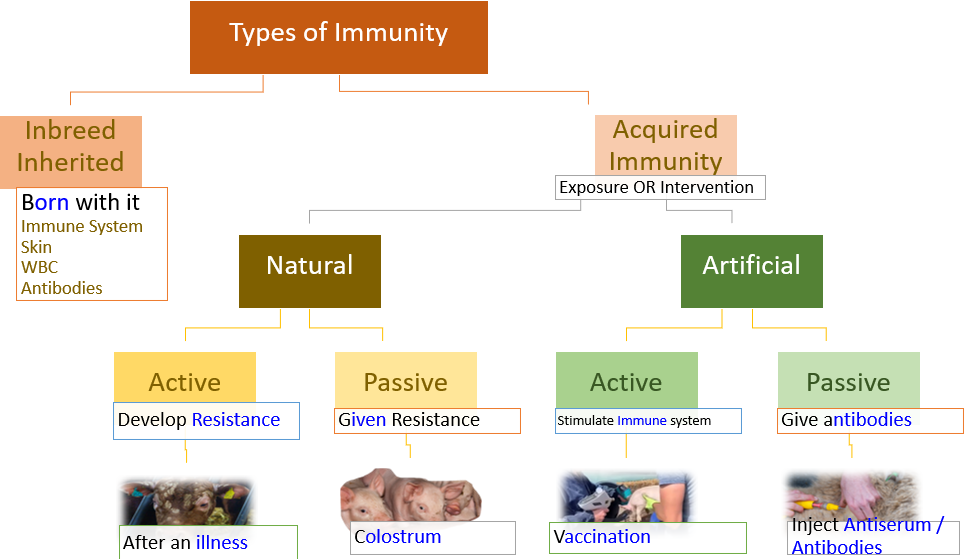
Immunity is the body’s defence system against disease. It involves recognizing and eliminating foreign material. Various types of immunity include. When an animal is exposed to an infection, its body produces antibodies to fight it off.
Various Types of immunity include:
1. Inborn or Inherited Immunity
Inborn immunity is passed genetically and prevents certain diseases. Humans and animals have immunity to many of each other’s diseases, but some zoonotic diseases are cross-transmissible:
- Zoonoses: Diseases such as ringworm, leptospirosis, salmonella, and enzootic abortion can spread between animals and humans.
- Other diseases, such as BVD in cattle and pulpy kidney in sheep, are not transmissible to humans.
Some breeds, such as the N’Dama cattle of Guinea, have evolved heightened immunity against local parasites and diseases, showcasing the role of genetics in resistance.
2. Acquired Immunity
Acquired immunity occurs through exposure or intervention and is categorized as follows:
Natural Active
- Animals recover from diseases like ringworm and develop resistance, rarely being affected twice..
Natural Passive
- Colostrum Antibodies are transferred from the mother to the offspring via colostrum (first milk), helping newborn calves and lambs build immunity.
Artificial Active
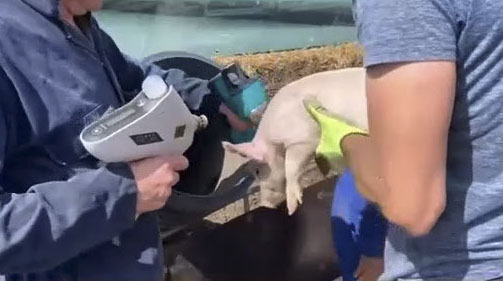
- Vaccines stimulate the immune system to create antibodies.
🧪 Examples: Rotavac, Heptavac, Leptavoid

Artificial Passive
- In emergencies, antibodies are administered directly through immune serums, such as tetanus antitoxin (TAT) to give immediate protection.
How the Immune System Works
When the body is attacked by pathogens, the immune system:
- Triggers inflammation
- Attracts white blood cells (e.g. macrophages)
- Kills invaders
Role of Antibodies.
Antibodies are a vital part of the immune response:
- They trigger inflammation to isolate and destroy pathogens.
- Macrophages are attracted to the site of infection to consume intruders.
- Some antibodies attack large parasites like worms, while others contribute to pus formation in infected wounds.
Antibodies attack invaders and some fight off parasites like worms. The pus in wounds is made up of dead antibodies and white blood cells!
Final Thoughts
Keeping farm animals healthy means understanding the threats they face and how to deal with them. Whether it’s bacteria, viruses, parasites, or nutritional problems — the key to good livestock husbandry is to observe, prevent, and treat when needed.
👉 Top tip: Always work closely with a experience livestock person and vet. Good hygiene, careful observation, and planned treatments are your best tools.
Below is presentation which gives more details about “Risk Assessments and completing them.”
