
Professional Practice for Agricultural
Learning Outcomes:
- Restrain and handle animals in a safe and appropriate manner
- Safely load, unload and transport harvested crops in accordance with legislation and codes of practice
Legal Responsibilities
All livestock handling must comply with:
- Welfare of Animals (Transport) (England) Order 2006
- Animal Welfare Act 2006
- Health and Safety at Work etc. Act 1974
Documentation & Records
Accurate records are legally required.
Livestock transport may require:
- Movement licences (e.g. ARAMS for sheep)
- Cattle passport documentation
- Haulier authorisation (where required)
- Journey logs (long journeys)
Crop/resource transport may require:
- Delivery notes
- Waste transfer documentation
- Fertiliser records
- Fuel compliance records
Manual and electronic records must be:
- Accurate
- Completed promptly
- Stored correctly
Poor paperwork triggers inspections.
Handling and transport are two of the highest risk activities on any farm.
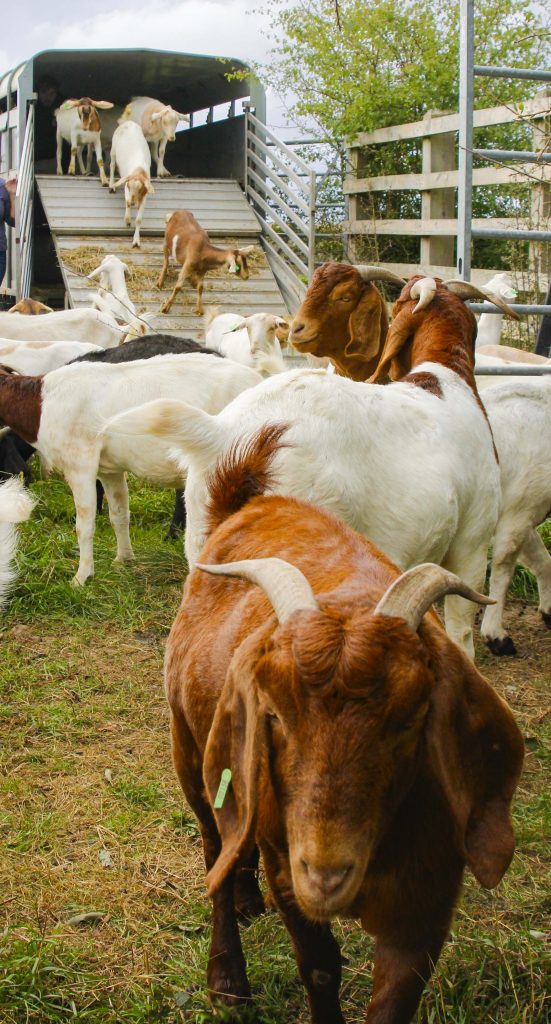
They combine:
- Animal welfare
- Human safety
- Legal compliance
- Financial risk
- Customer standards
Get it right and the job runs smoothly.
Get it wrong and it costs money — or worse.
1️⃣ Safe Restraint & Handling of Livestock
Legal Responsibilities
All livestock handling must comply with:
- Animal Welfare Act 2006
- Health and Safety at Work etc. Act 1974
- Welfare of Animals (Transport) (England) Order 2006
These require you to:
- Prevent unnecessary stress or suffering
- Protect yourself and others
- Use suitable restraint methods
- Ensure animals are fit for movement
🔎 Teaching Prompt:
Why does poor handling reduce profitability?
Understanding Animal Behaviour
Before restraint, understand:
- Flight zone
- Point of balance
- Herd instinct
- Field of vision
- Reaction to noise
Good handling is quiet, controlled and planned.
If you’re chasing, shouting or rushing — something has already gone wrong.
🔎 Teaching Prompt:
Why does isolating a single sheep often create more stress than moving a group?
Suitable Methods of Restraint
Restraint must match:
- Species
- Age
- Size
- Temperament
- Task
🐄 Cattle
- Crush with head yoke
- Calf gates for youngstock
- Secure race systems
- Always maintain an escape route
🐑 Sheep
- Hurdles for gathering
- Turning and setting on rump
- Avoid excessive wool pulling
- Extra care in late pregnancy
🐖 Pigs
- Pig boards
- Sorting paddles
- Avoid cornering
- Extreme caution with sows and litters
🔎 Teaching Prompt:
What could go wrong if restraint equipment is poorly maintained?
Risk Assessment Before Handling
Always check:
- Flooring condition
- Gate security
- Lighting
- Escape routes
- Availability of assistance
- PPE (steel toe boots, gloves, etc.)
Handling areas must be fit for purpose — not improvised.
2️⃣ Loading & Transport of Livestock
Fitness for Transport
Animals must not be transported if they are:
- Severely lame
- Injured
- Heavily pregnant (beyond legal limits)
- Recently given birth
- Unfit due to illness
Transporting unfit animals breaches welfare law and may result in prosecution.
🔎 Teaching Prompt:
Who is legally responsible if an unfit animal is transported — the farmer or the haulier?
Vehicle Standards
Transport vehicles must be:
- Cleaned and disinfected
- Non-slip and secure
- Adequately ventilated
- Partitioned correctly
- Loaded within stocking density limits
Overcrowding causes bruising, stress and financial loss.
Safe Loading Procedures
Loading must be:
- Calm and steady
- Well supervised
- Using correctly angled ramps
- With secure side guards
- Without unnecessary force
Electric goads are restricted and should not be routine tools.
Animals remember bad experiences — poor loading today makes tomorrow harder.
🚛 Key Factors When Transporting Livestock
(in line with the Welfare of Animals (Transport) (England) Order 2006 and duty of care requirements)
Transporting livestock safely is both a legal requirement and a welfare priority. Poor transport conditions increase stress, injury, disease risk and financial loss. Each factor below is specifically linked to legal expectations around fitness to travel, vehicle suitability, and protection from suffering.
📏 Space (Stocking Density)
Why it matters:
Animals need enough room to stand naturally, balance during movement, and lie down on longer journeys.
Welfare risks if inadequate:
- Trampling and bruising
- Falls during braking/turning
- Heat stress (crowding increases temperature)
- Fatigue and injury
Legal link:
The transport legislation requires animals to have sufficient floor area and height to avoid injury and suffering.
Good practice on farm:
- Follow species-specific stocking density guidance
- Adjust for weather and journey length
- Allow extra space for horned or heavily pregnant animals
👉 Bottom line: Overcrowding is one of the quickest ways to breach welfare law.
🐑 Segregation of Livestock
Why it matters:
Mixing incompatible animals increases fighting, bullying, and injury during transport.
Welfare risks if ignored:
- Aggression and mounting
- Stress and exhaustion
- Injuries from horns or size differences
- Young animals being crushed
Legal link:
Animals that may cause injury or suffering to each other must be separated during transport.
Animals commonly needing separation:
- Different species
- Significantly different sizes/ages
- Males and females in some cases
- Horned vs non-horned
- Aggressive individuals
- Unfamiliar groups (where practical)
👉 Bottom line: Poor segregation = preventable injuries and possible non-compliance.
🌬️ Ventilation
Why it matters:
Good airflow removes heat, moisture and harmful gases (e.g., ammonia).
Welfare risks if poor:
- Heat stress
- Breathing difficulties
- Build-up of humidity
- Increased disease risk
Legal link:
Vehicles must provide adequate ventilation appropriate to the species and weather conditions.
Good practice:
- Check vents are open and unobstructed
- Adjust ventilation for weather
- Avoid stationary vehicles in warm conditions
- Monitor animals during the journey
👉 Bottom line: If animals overheat due to poor airflow, transport welfare rules may be breached.
🌡️ Temperature Control
Why it matters:
Livestock are highly sensitive to temperature extremes, especially during transport stress.
Welfare risks if unmanaged:
- Heat stress or heatstroke
- Hypothermia in cold/wet conditions
- Dehydration
- Death in severe cases
Legal link:
Transporters must protect animals from extreme temperatures and adverse weather.
Good practice:
- Adjust stocking density in hot weather
- Avoid transporting in extreme conditions where possible
- Provide bedding in cold weather
- Plan journey timing (e.g., cooler parts of day)
- Monitor animals regularly
👉 Bottom line: Temperature mismanagement is a common cause of transport welfare failures.
💡 Light
Why it matters:
Animals load and unload more calmly when they can see clearly.
Welfare risks if inadequate:
- Balking and refusal to move
- Increased stress and panic
- Slips and falls
- Rough handling by staff trying to move reluctant animals
Legal link:
The legislation requires adequate lighting for inspection and handling during transport.
Good practice:
- Ensure loading ramps are well lit
- Avoid harsh shadows
- Provide internal lighting if needed for inspection
- Use natural light where possible
👉 Bottom line: Good lighting improves calm handling and reduces injury risk.
🧠 Take-Home Message
Safe livestock transport is about:
- 📏 Enough space
- 🐑 Correct segregation
- 🌬️ Good airflow
- 🌡️ Controlled temperature
- 💡 Adequate lighting
✔ Protects animal welfare
✔ Keeps you legally compliant
✔ Reduces losses and injuries
✔ Improves meat quality and farm reputation
Securing and Protecting the Load
Livestock
- Even weight distribution
- Secure partitions
- Correct space allowance
Harvested Crops & Resources
- Correct sheeting
- Proper load strapping
- Legal axle weights
- No risk of spillage
If material falls onto the highway, liability sits with the operator.
Documentation & Records
Accurate records are legally required.
Livestock transport may require:
- Movement licences (e.g. ARAMS for sheep)
- Cattle passport documentation
- Haulier authorisation (where required)
- Journey logs (long journeys)
Crop/resource transport may require:
- Delivery notes
- Waste transfer documentation
- Fertiliser records
- Fuel compliance records
Manual and electronic records must be:
- Accurate
- Completed promptly
- Stored correctly
Poor paperwork triggers inspections.
🔎 Teaching Prompt:
Why is digital record accuracy becoming increasingly important for inspections?
Customer Requirements
Different markets expect different standards:
- Slaughter cattle → withdrawal periods & minimal bruising
- Store lambs → weight consistency
- Grain → moisture specification
- Potatoes → minimal impact damage
Transport directly affects:
- Quality
- Price
- Reputation
- Future contracts
🔎 Teaching Prompt:
How can poor loading reduce carcass grade?
3️⃣ Professional Standards Expected
By the end of training, apprentices should be able to:
✔ Assist with safe restraint and movement of livestock
✔ Assess fitness for transport
✔ Load and secure livestock or crops correctly
✔ Complete required paperwork accurately
✔ Understand legal and welfare responsibilities
✔ Recognise customer quality expectations
Handling and transport are not “basic jobs.”
They are skilled tasks requiring judgement, awareness and professionalism.
Below is presentation which gives more details about “Risk Assessments and completing them.”
